In a world where nearly every click, swipe, and transaction generates data, protecting privacy has become one of the defining challenges of the digital age. Organizations rely on data to innovate, optimize operations, and deliver personalized services—but the more data they collect, the greater the risk of exposure. Privacy-preserving computation tools are emerging as powerful solutions that allow organizations to extract value from data without exposing sensitive information. These technologies are reshaping how businesses, governments, and researchers think about data security and trust.
TLDR: Privacy-preserving computation tools enable organizations to analyze and use data without directly exposing sensitive information. Technologies like homomorphic encryption, secure multiparty computation, differential privacy, and federated learning allow insights while minimizing privacy risks. These tools are becoming essential for regulatory compliance, cybersecurity resilience, and consumer trust. As data use expands, privacy-enhancing technologies are quickly shifting from optional safeguards to core infrastructure.
Why Privacy-Preserving Computation Matters
Modern data ecosystems are interconnected and complex. Cloud computing, artificial intelligence, and cross-border collaborations mean data is constantly in motion. Traditional approaches to data protection—such as encrypting data at rest or in transit—are no longer enough. Once decrypted for analysis, sensitive information can still be exposed to breaches, insider threats, or misconfigurations.
Privacy-preserving computation tools address this weakness by enabling computation without revealing the raw data itself. Instead of protecting data only during storage or transfer, these methods protect data during processing. This represents a fundamental advancement in privacy engineering.

Key Privacy-Preserving Technologies
Several technologies form the backbone of privacy-preserving computation. Each offers a different approach to balancing usability and confidentiality.
1. Homomorphic Encryption (HE)
Homomorphic encryption allows computations to be performed directly on encrypted data. The output remains encrypted and can only be decrypted by someone with the appropriate key. The remarkable benefit is that sensitive data never appears in plain text during processing.
For example: A healthcare provider could send encrypted patient records to a cloud service for analysis. The cloud platform processes the data without decrypting it, and the encrypted results are returned. At no point does the cloud provider see actual patient information.
Advantages:
- Maintains end-to-end data confidentiality
- Reduces trust requirements for third-party processors
- Supports secure data outsourcing
Challenges:
- Computationally intensive
- Slower than traditional processing methods
Despite performance trade-offs, advances in cryptographic research are steadily improving feasibility.
2. Secure Multiparty Computation (SMPC)
Secure multiparty computation allows multiple parties to collaboratively compute a function over their inputs without revealing those inputs to each other.
Imagine several competing banks wanting to detect fraud patterns across shared customers without exposing their proprietary customer data. SMPC lets them compute joint analytics where each party contributes encrypted data fragments. No institution sees another’s raw information, yet they gain collective insights.
Core benefits include:
- Enables secure collaboration across organizations
- Reduces data-sharing risks
- Maintains competitive and regulatory boundaries
SMPC is particularly attractive in finance, cybersecurity intelligence sharing, and cross-industry research initiatives.
3. Differential Privacy
Differential privacy focuses on limiting what can be inferred about any single individual within a dataset. It introduces controlled statistical noise into query results so that identifying a specific individual becomes mathematically improbable.
For example, a government agency publishing demographic statistics can apply differential privacy to ensure no one can reverse-engineer the data to identify a specific citizen.
This approach is especially useful for:
- Public data releases
- Large-scale analytics platforms
- Machine learning model training
Major technology platforms increasingly use differential privacy to collect usage insights without tracking individual users.
4. Federated Learning
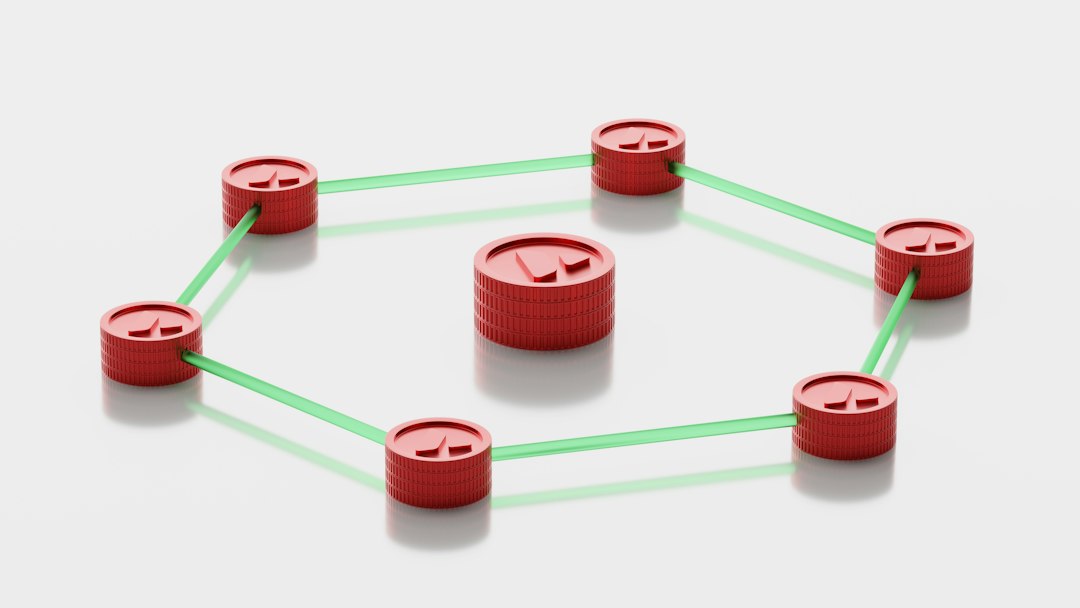
Federated learning trains machine learning models across multiple decentralized devices or servers without moving the raw data to a central location.
Rather than aggregating user data into one giant database, the model is sent to local devices. Each device improves the model using local data, then sends only updates (not raw data) back to a central server.
Key strengths:
- Reduces centralized data storage risks
- Enhances user privacy
- Supports edge computing environments
This method is particularly popular in mobile technology, healthcare research, and IoT ecosystems.
Real-World Applications
Privacy-preserving computation tools are not just theoretical—they are actively transforming industries.
Healthcare
Hospitals and research institutions can collaborate on disease modeling and drug discovery without sharing identifiable patient data. This fosters innovation while remaining compliant with strict health data regulations.
Finance
Banks can detect systemic fraud patterns or assess credit risk collaboratively without exposing customer data to competitors. Encrypted analytics protect both institutions and clients.
Advertising and Marketing
Marketers can measure campaign effectiveness and audience trends using aggregated or privacy-enhanced statistics instead of tracking individuals directly. This balances personalization with user privacy expectations.
Government and Public Policy
Statistical agencies can publish census and economic data while minimizing the risk of re-identification attacks. Secure data-sharing frameworks also support cross-border policy research.
Regulatory Drivers and Compliance
Growing privacy regulations have accelerated adoption of privacy-enhancing technologies. Laws such as the General Data Protection Regulation (GDPR), the California Consumer Privacy Act (CCPA), and similar frameworks worldwide impose strict obligations on data controllers.
Privacy-preserving computation tools help organizations:
- Minimize data exposure risks
- Demonstrate proactive compliance measures
- Reduce liability in case of breach
- Strengthen cross-border data governance
By embedding privacy into technical architecture, companies shift from reactive compliance to proactive design—a concept often called privacy by design.
Operational and Technical Considerations
While powerful, privacy-preserving tools come with trade-offs. Organizations must carefully evaluate:
- Performance impact: Encryption-heavy methods may slow computations.
- Complexity: Implementation often requires specialized cryptographic expertise.
- Scalability: Large datasets demand optimized architectures.
- Interoperability: Systems must integrate with existing infrastructure.
Hybrid solutions are common. For example, federated learning might be combined with differential privacy to enhance protection. The right mix depends on risk tolerance, regulatory environment, and operational needs.

Advantages Beyond Compliance
Although regulatory pressure drives adoption, privacy-preserving computation provides broader strategic advantages.
1. Enhanced Consumer Trust
Transparency around privacy-enhancing technologies builds confidence. Organizations that demonstrate active data minimization differentiate themselves in competitive markets.
2. Reduced Breach Impact
Even if systems are compromised, encrypted or privacy-enhanced data drastically reduces the damage attackers can cause.
3. Safer Data Collaboration
Collaborative analytics across industries, research institutions, and governments become feasible without sacrificing confidentiality.
4. Ethical AI Development
Machine learning systems trained with privacy safeguards reduce the risk of discriminatory or invasive outcomes, aligning innovation with responsible data stewardship.
The Future of Privacy-Preserving Computation
As computational power increases and cryptographic techniques mature, privacy-preserving tools will likely become mainstream components of data systems. Hardware acceleration for encrypted operations, standardized APIs, and regulatory recognition will further streamline adoption.
Emerging areas to watch include:
- Zero-knowledge proofs for identity verification without revealing credentials
- Confidential computing using secure hardware enclaves
- Advanced hybrid cryptographic frameworks combining multiple privacy techniques
What was once considered cutting-edge research is quickly transitioning into practical enterprise infrastructure.
Conclusion
Privacy-preserving computation tools represent a transformative shift in how we handle sensitive data. Instead of choosing between data utility and privacy, organizations can now achieve both. Technologies like homomorphic encryption, secure multiparty computation, differential privacy, and federated learning are redefining secure analytics.
As digital ecosystems evolve and data volumes surge, these tools will become foundational to responsible innovation. Businesses that invest in privacy-enhancing infrastructure today position themselves not only for regulatory compliance but also for long-term trust and resilience in a data-driven world.