Interactive learning platforms have evolved from supplemental educational tools into essential infrastructure across industries in 2026. Organizations no longer view digital learning as a passive repository of videos and quizzes; instead, they treat it as a dynamic, data‑driven ecosystem that supports skill development, compliance, collaboration, and measurable performance outcomes. Advances in artificial intelligence, real‑time analytics, immersive media, and adaptive design have made these platforms far more practical and effective than earlier e‑learning systems.
TLDR: Interactive learning platforms in 2026 are mission‑critical tools used across education, healthcare, government, and private enterprise. They deliver adaptive, data‑driven experiences that improve skill acquisition, compliance, performance tracking, and workforce readiness. From corporate onboarding to virtual labs and public sector resilience training, these platforms now provide measurable returns on investment. Their real‑world impact is visible in both cost efficiency and learner engagement.
Below are 12 real‑world use cases demonstrating how interactive learning platforms are applied in 2026.
1. Corporate Onboarding and Workforce Integration
Modern organizations use interactive learning platforms to streamline onboarding for distributed teams. New hires complete structured learning paths that combine short lessons, simulations, collaborative exercises, and live feedback.
- Scenario-based simulations familiarize employees with workflows.
- AI chat assistants answer policy-related questions 24/7.
- Performance dashboards allow managers to monitor progress in real time.
The result is a faster transition to productivity, reduced training costs, and consistent standards across global offices.
2. Healthcare Clinical Skills Training
In healthcare, precision and accuracy directly impact patient outcomes. Interactive learning platforms support clinical training by integrating immersive case simulations, branching decision trees, and virtual labs.

Medical students and practitioners can rehearse procedures in controlled digital environments before performing them in real settings. These systems track decision‑making patterns and provide feedback aligned with evidence‑based protocols. Hospitals report measurable reductions in procedural errors and improved compliance with updated guidelines.
3. Compliance and Regulatory Certification
Regulated industries—including finance, energy, and pharmaceuticals—face complex compliance requirements. Interactive platforms ensure mandatory training is not only completed but understood.
- Adaptive quizzes focus on weak knowledge areas.
- Automated reminders prevent certification lapses.
- Digital audit trails maintain comprehensive records.
Unlike traditional slide-based courses, interactive modules encourage engagement, reducing the risk of non‑compliance due to superficial learning.
4. K‑12 Personalized Learning Environments
Schools increasingly rely on interactive platforms to support differentiated instruction. AI-driven recommendation engines adjust difficulty levels, pacing, and content formats according to each student’s performance and preferences.
Teachers use analytics dashboards to identify learning gaps and intervene early. Students engage in collaborative challenges and gamified exercises that strengthen retention. In districts adopting these systems, improvements in literacy and mathematics proficiency have been documented within one academic year.
5. Higher Education Virtual Laboratories
Universities supplement physical labs with virtual experimentation spaces. Students in engineering, chemistry, and environmental sciences use interactive simulations to conduct experiments that would otherwise be cost‑prohibitive or hazardous.
- Real-time feedback adjusts variables.
- Collaborative tools support group experimentation.
- Detailed reports evaluate analytical reasoning.
By removing logistical constraints, institutions expand access to experiential learning without increasing operational costs.
6. Manufacturing and Industrial Safety Training
Industrial environments present complex operational risks. Interactive platforms prepare workers through realistic safety simulations that replicate plant environments, equipment handling, and emergency scenarios.
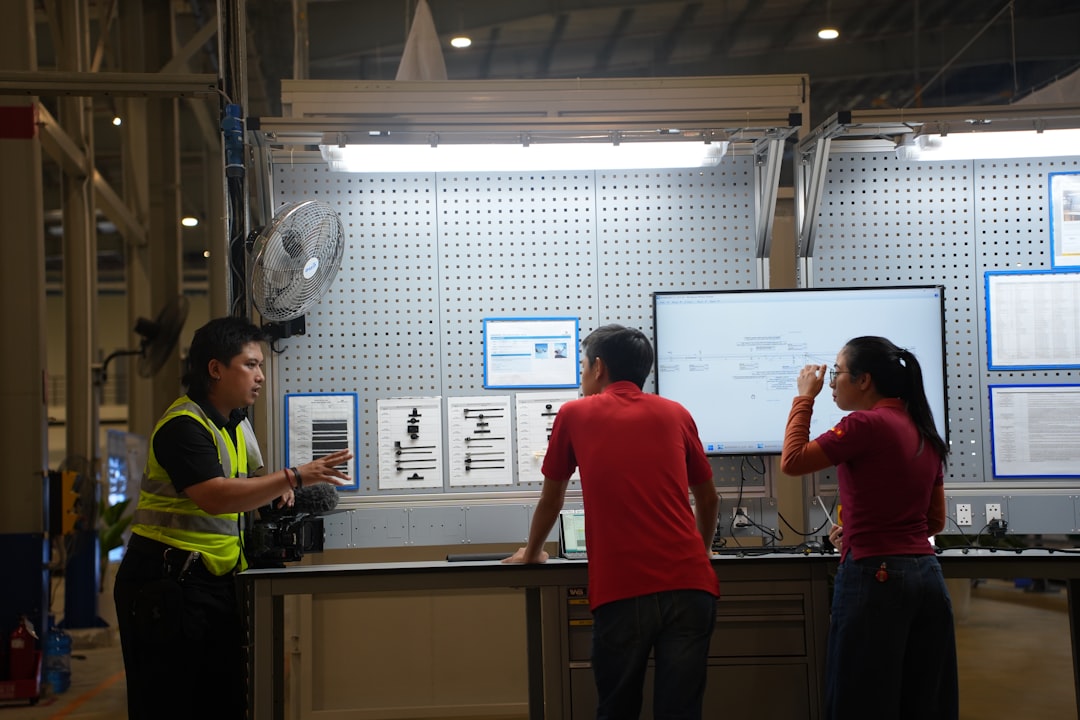
Virtual exercises allow employees to practice emergency responses without exposure to real danger. Companies report a reduction in workplace incidents and improved adherence to safety protocols.
7. Remote Workforce Skill Development
By 2026, hybrid and remote work arrangements remain standard in many sectors. Interactive learning platforms enable ongoing professional development independent of physical location.
Employees attend live workshops, participate in guided peer discussions, and complete project-based assessments within a centralized digital ecosystem. AI‑based skills mapping tools identify competency gaps and recommend targeted modules.
This systematic approach to continuous learning supports internal mobility and talent retention.
8. Government and Public Sector Resilience Training
Public agencies utilize interactive platforms to prepare personnel for crisis response, cybersecurity threats, and disaster management. These systems offer scenario planning tools that simulate evolving conditions.
- Emergency responders rehearse coordinated actions.
- Cybersecurity teams practice defensive protocols.
- Policy leaders evaluate response scenarios under varying constraints.
Data collected during simulations informs strategic planning and strengthens institutional readiness.
9. Sales Enablement and Product Mastery
Interactive learning platforms help sales teams remain informed about evolving product portfolios and market dynamics. Interactive modules combine microlearning segments, customer simulations, and objection-handling exercises.
AI-powered analytics highlight performance trends and identify knowledge gaps. Sales representatives who complete adaptive product training demonstrate improved conversion rates and stronger client confidence.
10. Technical Certification and IT Skills Training
Technology companies and certification bodies rely heavily on interactive platforms for preparing professionals in cloud computing, cybersecurity, data science, and artificial intelligence.

Hands‑on labs embedded in the browser allow learners to work within sandboxed development environments. Immediate feedback corrects errors in configuration or coding syntax. This applied approach accelerates credential attainment while maintaining rigorous standards.
11. Soft Skills and Leadership Development
Beyond technical knowledge, organizations increasingly prioritize communication, critical thinking, and leadership competencies. Interactive platforms offer role‑playing simulations in which participants navigate complex interpersonal scenarios.
For example:
- Managers practice delivering performance feedback.
- Executives engage in ethical dilemma simulations.
- Teams collaborate on problem-solving exercises.
Advanced systems use sentiment analysis and conversational AI to evaluate tone, clarity, and decision quality. This structured feedback helps refine behavioral competencies traditionally considered difficult to measure.
12. Vocational Training and Workforce Reskilling
As labor markets evolve, workforce reskilling has become a strategic priority. Interactive platforms support vocational education in sectors such as renewable energy, logistics, construction, and healthcare support services.
Learners combine instructional modules with simulation-based practice and competency assessments aligned to industry standards. Employers frequently partner with training providers to ensure content reflects emerging job requirements.
Governments leverage these platforms to reduce unemployment gaps by equipping displaced workers with marketable skills. Measurable placement rates demonstrate their effectiveness as engines of economic mobility.
Key Features Driving Real‑World Impact
The effectiveness of interactive learning platforms in 2026 stems from several core capabilities:
- Adaptive Personalization: Algorithms adjust learning paths in response to performance data.
- Immersive Simulations: Realistic scenarios enhance experiential learning.
- Data-Driven Analytics: Detailed reporting measures engagement and mastery.
- Cross-Platform Accessibility: Mobile and desktop compatibility ensures wide reach.
- Credentialing Integration: Digital badges and certifications streamline verification.
These features transform learning from a static content delivery mechanism into a strategic performance system.
Measured Outcomes and Return on Investment
Organizations adopting interactive learning platforms report tangible improvements across several metrics:
- Reduced training time.
- Higher retention rates.
- Improved compliance adherence.
- Stronger employee engagement scores.
- Lower operational risk exposure.
Cost efficiencies arise from scalable delivery models and lower reliance on physical infrastructure. Moreover, the ability to monitor learning analytics in real time enables continuous optimization.
Conclusion
In 2026, interactive learning platforms are no longer experimental technologies. They represent a mature, data‑backed solution for education and workforce development across sectors. Their ability to combine personalization, simulation, collaboration, and analytics ensures that learning outcomes are measurable and aligned with organizational goals.
As industries continue to adapt to technological change and evolving regulatory frameworks, the demand for scalable, interactive, and intelligent learning systems will only increase. The twelve real‑world use cases outlined above demonstrate that these platforms are not theoretical innovations—they are operational tools delivering consistent value in classrooms, hospitals, factories, offices, and government institutions worldwide.