In 2017, headlines around the world announced that Bill Gates had invested in a futuristic “smart city” in Arizona. The idea sounded almost cinematic: a high-tech community rising from the desert, designed around autonomous vehicles, advanced logistics, renewable energy, and ultra-fast digital connectivity. But what exactly was the project, why was Arizona chosen, and how much of the “Bill Gates smart city” story is real vision versus media hype?
TLDR: Bill Gates, through an investment group, helped fund the purchase of thousands of acres of land west of Phoenix for a planned community often called Belmont. The concept was promoted as a smart city that could incorporate autonomous vehicles, data-driven infrastructure, and sustainable urban design. However, Gates did not personally unveil a detailed city plan, and the project has developed slowly amid questions about water, infrastructure, growth, and feasibility. The vision remains fascinating because it reflects a bigger debate: what should the cities of the future actually look like?
What Was the Arizona Smart City Project?
The project most commonly associated with Bill Gates’ Arizona smart city vision is Belmont, a proposed master-planned community in the desert west of Phoenix, near Tonopah. The land purchase involved roughly 24,800 acres, a vast area large enough to imagine an entirely new urban environment rather than simply another neighborhood on the edge of an existing city.
The purchase was made by Belmont Partners, with financial backing connected to Cascade Investment, the private investment firm that manages much of Gates’ wealth. Reports at the time placed the investment at around $80 million. That figure helped turn a real estate development story into a global news event almost overnight.
Early descriptions of Belmont suggested a community that could include:
- Residential neighborhoods with tens of thousands of homes
- Commercial and office space for businesses and innovation-driven industries
- Public schools and community facilities
- Advanced communications infrastructure such as high-speed networks
- Autonomous vehicle readiness and modern mobility systems
- Logistics and distribution hubs connected to major transportation corridors
The most attention-grabbing part was the claim that Belmont would be a smart city: not just a large housing development, but a place designed from the beginning to integrate technology into daily life.
Why Arizona?
Arizona may seem like a surprising location for a futuristic city, especially given its desert climate and long-running concerns about water. But from a development and logistics perspective, the location had several advantages.
First, the Phoenix metropolitan area has been one of the fastest-growing regions in the United States for decades. People and companies have continued moving to Arizona due to its relatively affordable land, business-friendly environment, warm climate, and proximity to California without California-level costs.
Second, the Belmont land sits near important transportation routes. The site is close to Interstate 10, one of the country’s major east-west highways, and it was also discussed in relation to the proposed Interstate 11 corridor, a long-term infrastructure concept that could eventually better connect Arizona, Nevada, and potentially ports and trade routes beyond.
Third, Arizona has positioned itself as a testing ground for advanced mobility. Companies working on autonomous vehicles, electric transportation, robotics, and logistics have shown interest in the region because of its wide roads, predictable weather, and relatively open regulatory climate. A new city designed with these technologies in mind would fit naturally into that broader innovation ecosystem.
What Makes a City “Smart”?
The phrase smart city is used often, but it can mean different things depending on who is using it. At its simplest, a smart city uses technology and data to make urban life more efficient, sustainable, and responsive.
In practical terms, a smart city might include:
- Connected traffic signals that adapt to congestion in real time
- Autonomous shuttle systems or lanes designed for self-driving vehicles
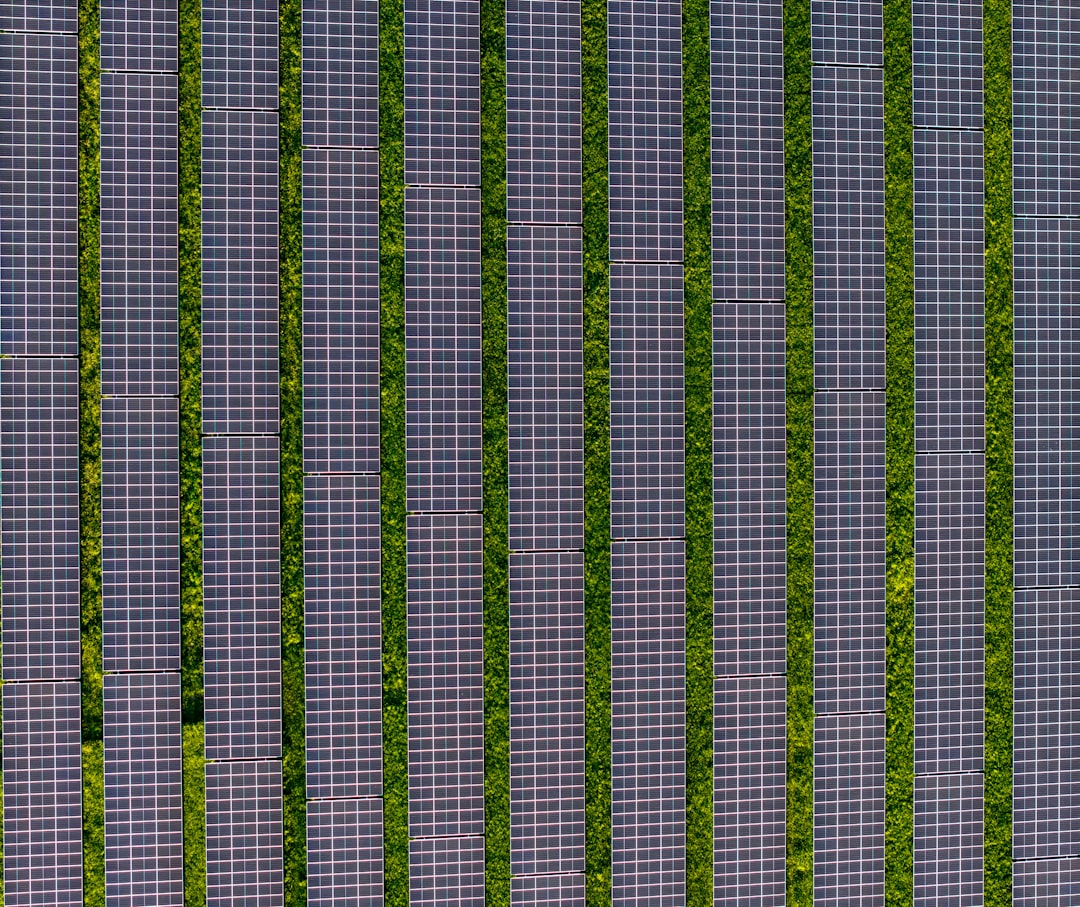
- Smart energy grids that balance demand and integrate solar power
- Water sensors that detect leaks and manage limited resources more efficiently
- High-speed internet access built into the city’s infrastructure
- Data-driven public services for safety, maintenance, and planning
- Walkable mixed-use districts that reduce car dependency
For Belmont, the excitement came from imagining these systems not as retrofits, but as part of the city’s DNA from day one. Most cities must bolt new technologies onto old roads, aging pipes, and outdated zoning patterns. A new city, at least in theory, can be planned around future needs before the first home is built.
Bill Gates’ Role: Visionary Planner or Strategic Investor?
One important clarification is that Bill Gates was not publicly acting as the project’s master planner, mayor, or chief architect. The story was often framed as “Bill Gates is building a smart city,” but the reality was more nuanced. The investment came through entities associated with his wealth management operations, not through a personal public campaign led by Gates himself.
That distinction matters. Gates is famous for his interest in technology, climate solutions, energy innovation, public health, and long-term global challenges. So it was easy for people to connect his name to a bold urban experiment. However, there has not been a detailed Gates-authored blueprint explaining exactly how Belmont should function as a smart city.
In other words, it is fair to say that Gates-linked capital helped support the land acquisition. It is less accurate to say that Gates personally presented a finished smart city vision with a clear construction timeline, technical plan, and governance model.
The Promise of Starting From Scratch
The most compelling argument for Belmont was the opportunity to build a city without the constraints of existing urban systems. Older cities often struggle with fragmented infrastructure, political boundaries, traffic congestion, and expensive modernization projects. A blank-slate development could potentially avoid some of those problems.
Imagine a city where fiber-optic networks, electric charging systems, renewable energy, schools, parks, and transit corridors are planned together rather than separately. Streets could be designed to accommodate pedestrians, cyclists, delivery robots, electric buses, and autonomous vehicles. Buildings could be constructed with energy efficiency in mind from the beginning.
This is why the Belmont concept captured the imagination of technologists and urban planners. It suggested a future where the city itself becomes a platform, similar to the way a computer operating system supports apps and tools. If the physical environment is designed intelligently, businesses and residents can innovate on top of it.
The Big Challenges Facing the Project
For all its promise, building a new city in the Arizona desert is extraordinarily difficult. The first major challenge is water. Arizona faces long-term pressure from drought, Colorado River shortages, groundwater concerns, and rapid population growth. Any major development must answer a basic question: where will the water come from, and can it be supplied sustainably?
The second challenge is infrastructure cost. Roads, power lines, sewage systems, schools, hospitals, broadband networks, and emergency services are expensive. A large master-planned community can take decades to develop, and early phases often require huge upfront spending before a city has enough residents and businesses to support itself.
The third challenge is timing. Smart city technology evolves quickly. A system that looks advanced today may feel outdated in ten years. Planning a city around autonomous vehicles, for example, is exciting, but fully self-driving transport has rolled out more slowly than many early forecasts predicted.
The fourth challenge is community. A successful city is not just a collection of sensors, roads, and buildings. It needs culture, public spaces, local identity, economic opportunity, and social trust. Some critics of blank-slate smart cities argue that they risk becoming overly controlled, corporate-designed environments rather than organic, democratic communities.
Privacy and Data Concerns
Smart cities also raise a serious question: who owns the data? If traffic lights, utility meters, vehicles, security systems, and public spaces are all connected, they can generate enormous amounts of information about how people move and live.
That data can be useful. It can reduce traffic jams, improve emergency response, save energy, and detect infrastructure problems before they become disasters. But it can also create privacy risks if residents are constantly monitored or if private companies have too much control over civic information.
Any serious smart city vision must therefore include transparent rules about data collection, cybersecurity, public oversight, and individual rights. Technology alone does not make a city better; governance determines whether that technology serves residents or simply watches them.
Has Belmont Been Built?
Despite the attention it received, Belmont has not emerged quickly as a gleaming futuristic metropolis. Like many large land development projects, progress has been gradual and shaped by market conditions, planning processes, infrastructure requirements, and regional growth patterns.
This does not necessarily mean the project failed. Large-scale communities can take many years, even generations, to fully develop. However, the gap between the original headlines and the visible reality on the ground is a reminder that building cities is much harder than announcing visions.
It is also possible that the land’s long-term value lies partly in the future expansion of the Phoenix region and transportation corridors. In that sense, the investment may be as much about strategic land positioning as about immediately constructing a high-tech utopia.
How Belmont Fits Into the Future of Urban Planning
Even if Belmont never becomes the exact smart city imagined in early media coverage, the discussion around it remains important. Cities everywhere are trying to answer similar questions: How can they handle population growth? How can they reduce emissions? How can they conserve water? How can they prepare for autonomous vehicles, artificial intelligence, and remote work?
The best lessons from the Belmont idea may not be about building an entirely new city, but about applying smarter thinking to all cities. Existing communities can still benefit from better broadband, cleaner energy, modern transit, efficient water systems, and more flexible zoning.

In that sense, Belmont is both a real estate project and a symbol. It represents the hope that cities can be designed more intelligently, but also the caution that technology cannot magically solve environmental limits, economic realities, or human needs.
The Bottom Line
Bill Gates’ Arizona smart city vision is best understood as a Gates-linked investment in a massive planned community with smart city ambitions, rather than a fully detailed personal blueprint from Gates himself. The proposed Belmont development captured attention because it combined three powerful ideas: the growth of Arizona, the rise of smart infrastructure, and the dream of building a city for the future from the ground up.
Whether Belmont becomes a model for tomorrow’s urban life remains uncertain. Its success would depend not only on technology, but on sustainable water use, smart governance, economic opportunity, and livable design. The most interesting part of the story is not simply that a billionaire invested in desert land. It is that the project forces us to ask what kind of cities we want to build next: cities that are merely more connected, or cities that are genuinely more human, resilient, and wise.