In a world where millions of events are generated every second—from mobile app clicks and financial transactions to IoT sensor readings and social media interactions—organizations can no longer afford to wait hours or even minutes to analyze their data. Real-time stream processing has become the backbone of modern digital infrastructure, enabling businesses to react instantly, detect anomalies, personalize experiences, and maintain operational resilience under immense data loads.
TL;DR: Real-time stream processing tools allow organizations to ingest, process, and analyze high-volume data as it flows. Apache Kafka, Apache Flink, Apache Spark Structured Streaming, and Amazon Kinesis are four powerful platforms used to manage continuous data streams at scale. Each tool offers unique strengths in scalability, fault tolerance, and integration flexibility. Choosing the right one depends on your infrastructure, latency requirements, and development ecosystem.
Unlike traditional batch processing systems that work on static datasets, stream processing platforms continuously process events in motion. This shift enables use cases such as fraud detection in banking, predictive maintenance in manufacturing, live user analytics in SaaS platforms, and real-time recommendation engines in e-commerce.
Let’s explore four of the most widely adopted real-time stream processing tools that help businesses manage high-volume data efficiently and at scale.
1. Apache Kafka
Best known for high-throughput event streaming and distributed data pipelines
Apache Kafka has evolved from a messaging system into a full-fledged distributed event streaming platform. Originally developed at LinkedIn, Kafka is built to handle massive amounts of data with minimal latency and exceptional reliability.
Image not found in postmetaWhy Kafka Stands Out
- High throughput: Capable of handling millions of messages per second.
- Horizontal scalability: Add brokers to scale seamlessly.
- Fault tolerance: Data replication ensures resilience.
- Durable storage: Events are persisted, enabling replay and recovery.
Kafka works exceptionally well as a central data backbone. Producers write events to Kafka topics, and consumers process them independently. This decoupled architecture allows multiple services to consume the same stream without affecting one another.
While Kafka excels at transporting streams, it also integrates with tools like Kafka Streams and ksqlDB for real-time processing within the ecosystem itself. Organizations often use Kafka as the foundational layer upon which other processing frameworks operate.
Ideal For: Event-driven architectures, log aggregation, analytics pipelines, and microservices communication.
2. Apache Flink
Purpose-built for stateful, low-latency stream processing
Apache Flink is a powerful open-source stream processing framework designed for handling complex, continuous data streams. Unlike systems that began as batch processors and later adapted to streaming, Flink was built with streaming-first principles.
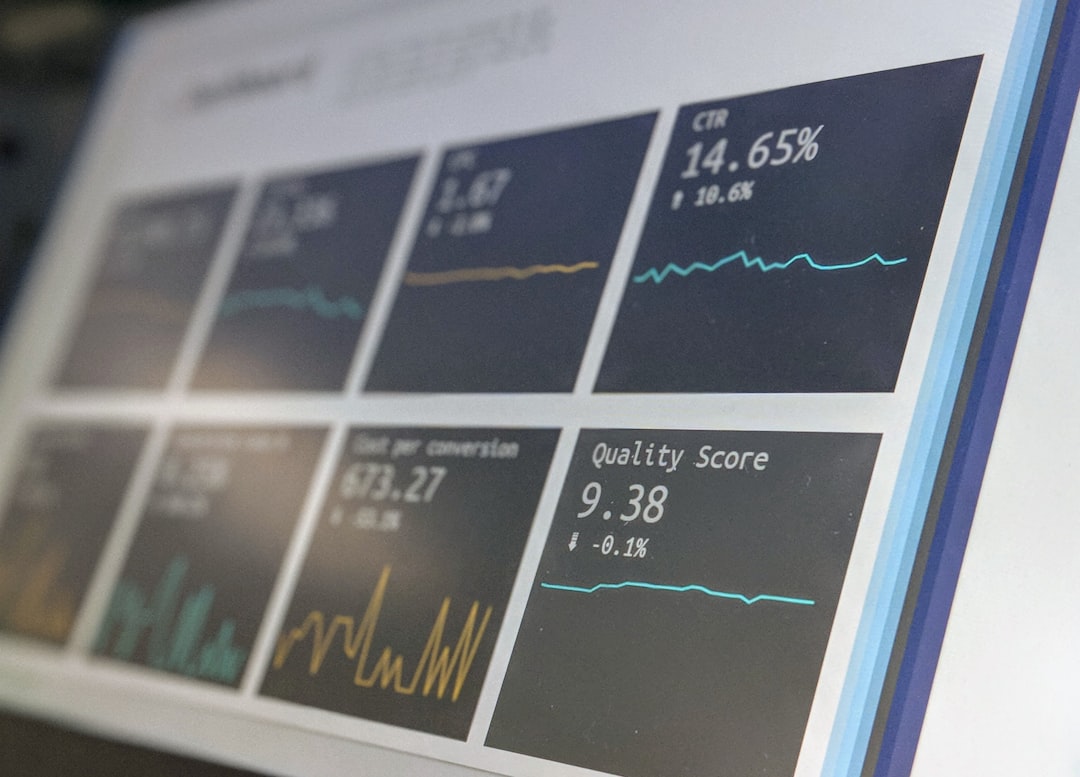
Key Strengths
- True streaming engine: Processes data event by event.
- Exactly-once semantics: Ensures consistency even during failures.
- Advanced state management: Efficient handling of large application states.
- Low latency: Designed for real-time responsiveness.
Flink shines in scenarios requiring complex event processing (CEP), such as fraud detection, real-time risk analysis, and behavioral pattern recognition. Its checkpointing mechanism enables it to recover seamlessly from failures while preserving application state.
Another strength lies in its flexible deployment. Flink runs on Kubernetes, YARN, and cloud-managed services, making it versatile across modern infrastructure landscapes.
Ideal For: Financial services, telecom networks, real-time alert systems, and any use case demanding consistent, stateful stream computation.
3. Apache Spark Structured Streaming
A unified analytics engine for both batch and streaming workloads
Apache Spark began as a batch processing framework, but its Structured Streaming module has matured into a highly capable streaming solution. For organizations already invested in the Spark ecosystem, Structured Streaming offers a seamless way to extend into real-time analytics.

What Makes It Powerful
- Unified framework: Batch and streaming share the same APIs.
- Micro-batching model: Processes small time-based chunks rapidly.
- Rich ecosystem: Integrates with MLlib, Spark SQL, and Delta Lake.
- Scalable architecture: Handles large data volumes across clusters.
Structured Streaming simplifies development by using familiar DataFrame and SQL abstractions. This reduces the learning curve for teams already working with Spark and enables faster implementation of streaming pipelines.
While its micro-batch approach introduces slightly higher latency compared to event-at-a-time systems like Flink, it remains sufficient for many business applications such as near-real-time dashboards, ETL pipelines, and customer analytics.
Ideal For: Organizations seeking unified batch and streaming analytics with strong ecosystem integration.
4. Amazon Kinesis
Fully managed real-time data streaming in the cloud
Amazon Kinesis is a managed service that simplifies the ingestion and processing of real-time data streams within AWS environments. It eliminates much of the operational overhead associated with self-managed streaming infrastructure.
Core Advantages
- Fully managed: No need to maintain servers.
- Elastic scaling: Automatically adjusts to workload demands.
- AWS integrations: Seamless connection with Lambda, S3, Redshift, and more.
- Multiple services: Includes Kinesis Data Streams, Firehose, and Data Analytics.
Kinesis is especially appealing for organizations operating primarily within AWS. It provides real-time ingestion with minimal configuration, enabling teams to focus on application logic instead of infrastructure complexity.
For startups and mid-sized companies without large DevOps teams, Kinesis delivers enterprise-grade streaming capabilities without the burden of cluster management.
Ideal For: Cloud-native applications, serverless architectures, and teams seeking managed streaming solutions.
Comparison Chart
| Tool | Primary Strength | Latency Model | Scalability | Best For |
|---|---|---|---|---|
| Apache Kafka | High-throughput event streaming backbone | Low latency messaging | Horizontal scaling via brokers | Event pipelines, data integration |
| Apache Flink | Stateful stream processing | True event-by-event processing | Cluster-based scaling | Fraud detection, complex event processing |
| Apache Spark Structured Streaming | Unified batch and streaming analytics | Micro-batch processing | Distributed cluster scaling | ETL, ML pipelines, analytics dashboards |
| Amazon Kinesis | Managed cloud streaming | Near real-time | Elastic cloud scaling | AWS-native applications |
How to Choose the Right Tool
Selecting the right streaming platform depends on several critical factors:
- Infrastructure Preference: On-premises and hybrid models often favor Kafka or Flink, while cloud-first strategies lean toward Kinesis.
- Latency Requirements: Ultra-low latency applications benefit from Flink’s event-at-a-time processing.
- Ecosystem Integration: Spark is ideal if you already rely heavily on Spark-based data engineering.
- Operational Expertise: Managed services reduce DevOps complexity.
No single tool is universally “best.” Many enterprises combine multiple technologies—using Kafka for ingestion, Flink for real-time processing, and Spark for advanced analytics, for example.
The Future of Real-Time Data Processing
As organizations generate more data from edge computing devices, AI-powered applications, and global digital platforms, the demand for real-time processing will only intensify. Modern systems are shifting toward declarative APIs, serverless execution models, and tighter integration with machine learning workflows.
Emerging innovations include:
- Streaming-native databases that merge storage and computation
- AI-enhanced anomaly detection integrated directly into pipelines
- Edge stream processing for IoT and 5G environments
Organizations that invest in flexible, scalable streaming architectures today are positioning themselves for faster insights, better customer experiences, and more resilient operations tomorrow.
Final Thoughts
High-volume data is no longer a competitive disadvantage if you have the right tools to manage it. Apache Kafka provides the backbone for event-driven systems. Apache Flink delivers sophisticated, stateful stream computation. Spark Structured Streaming unifies analytics workloads. Amazon Kinesis simplifies operations in the cloud.
Together, these tools demonstrate how real-time stream processing has matured into a cornerstone of modern data strategy. By understanding their strengths and aligning them with your operational goals, you can transform raw data streams into actionable intelligence—exactly when it matters most.