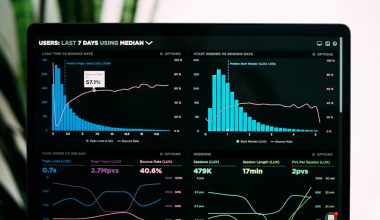
Restaurant analytics software is no longer only a back-office reporting tool; it is a daily operating system for controlling food cost, labor, sales trends, and multi-location performance. Ctuit Radar has long been used by restaurant groups for reporting and operational visibility, but many operators now compare it against newer platforms with stronger integrations, easier dashboards, invoice automation, or more flexible POS connectivity.
TLDR: The best Ctuit Radar alternative depends on whether your biggest challenge is prime cost control, inventory accuracy, labor optimization, or multi-unit reporting. For example, a 12-location casual dining group might reduce weekly reporting time by 30% by moving from spreadsheet-based exports to a platform with automated POS and invoice integrations. MarginEdge and Restaurant365 are strong for financial and operational control, while Toast, Square, and Lightspeed are practical choices for restaurants that want analytics tightly connected to their POS. Enterprise groups should also evaluate Oracle MICROS, MarketMan, and xtraCHEF for deeper reporting, purchasing, and invoice intelligence.
How to Evaluate Ctuit Radar Alternatives
Before choosing a replacement, define what “better analytics” means for your restaurant. Some platforms focus on accounting and profitability, while others are stronger in real-time sales dashboards, inventory, recipe costing, vendor control, or labor forecasting. A reliable alternative should integrate with your POS, accounting system, payroll tools, vendor invoices, and inventory workflows without forcing managers to duplicate work.
- Data accuracy: Does the system automatically pull POS, invoice, labor, and inventory data?
- Manager usability: Can store-level managers act on reports without needing finance support?
- Multi-location reporting: Can leadership compare locations, regions, and concepts?
- Cost control: Does it track food cost, theoretical usage, waste, and price changes?
- Scalability: Will it support your operations if you add 5, 20, or 100 locations?

1. Restaurant365
Restaurant365 is one of the most complete alternatives for restaurant groups that want analytics connected to accounting, operations, scheduling, and inventory. It is especially useful for multi-unit brands that need consolidated financial reporting and store-level accountability.
The platform brings together general ledger, accounts payable, inventory, recipe costing, budgeting, and operational dashboards. For leadership teams, this means fewer disconnected reports and a clearer view of prime cost. Restaurant365 is a strong fit for operators that want analytics tied directly to restaurant accounting rather than only POS reporting.
Best for: growing restaurant groups, franchise operators, and finance-led teams.
2. MarginEdge
MarginEdge is a practical choice for restaurants that want better control over invoices, inventory, and food cost without overwhelming managers. Its invoice processing is one of its most recognized strengths: restaurants can submit invoices, and the system extracts pricing, vendor, and item data for reporting.
MarginEdge helps teams monitor price changes, plate costs, purchasing trends, and controllable expenses. If a key ingredient rises by 12% over a month, managers can catch the issue quickly and adjust purchasing or menu pricing. It is often used by independent restaurants and small to mid-sized groups that need actionable operating data.
Best for: independent restaurants and groups focused on food cost visibility.
3. Toast
Toast is best known as a restaurant POS, but its reporting and analytics capabilities make it a serious alternative for operators who want insights directly connected to transactions. Toast analytics can show real-time sales, menu performance, labor trends, guest behavior, and location comparisons.
Its advantage is simplicity: when the POS, payments, online ordering, and reporting are in one ecosystem, managers spend less time reconciling data. Toast may not replace every advanced back-office function for a large enterprise, but for many restaurants, its built-in analytics are enough to guide staffing, menu decisions, and revenue growth.
Best for: restaurants that want POS-driven analytics in one integrated system.
4. Oracle MICROS Simphony
Oracle MICROS Simphony is a strong option for larger restaurant companies, hotels, casinos, and enterprise foodservice operations. It offers robust POS infrastructure with centralized reporting, menu management, and operational analytics across complex environments.
For brands operating across regions or countries, Oracle’s strengths include scalability, security, enterprise controls, and integration flexibility. It is not usually the simplest or cheapest option, but it is built for organizations that require structured governance, advanced reporting, and dependable performance at scale.
Best for: enterprise restaurants, hospitality groups, and global operators.

5. Square for Restaurants
Square for Restaurants is a more accessible option for small restaurants, cafes, quick-service concepts, and lean teams. Its analytics cover sales, item performance, employee activity, payments, and customer behavior. The interface is generally straightforward, which helps operators who do not have a dedicated analytics or finance department.
Square may not offer the same depth as enterprise back-office platforms, but it performs well for businesses that need clear daily reporting and fast setup. For example, a cafe owner can quickly identify that breakfast sandwiches generate higher margins than specialty pastries and adjust promotions accordingly.
Best for: small restaurants, cafes, food trucks, and quick-service operators.
6. Lightspeed Restaurant
Lightspeed Restaurant combines POS functionality with analytics designed for restaurants, bars, and hospitality venues. Its reporting tools help operators review sales by item, category, employee, time period, and location. For managers, this can support smarter scheduling, menu engineering, and service analysis.
Lightspeed is particularly useful for operations that want a modern POS experience with integrated insights. Depending on the setup, it can also connect with inventory, accounting, reservations, and loyalty tools, giving restaurants a more complete performance picture.
Best for: restaurants that want POS analytics with flexible integrations.
7. MarketMan
MarketMan is a strong Ctuit Radar alternative for operators focused on inventory, purchasing, vendor management, and recipe costing. It helps restaurants track stock levels, monitor supplier pricing, build recipes, and compare actual versus theoretical food usage.
This is valuable for restaurants where food cost variance is a major concern. If theoretical usage suggests $18,000 in food cost but actual usage is $20,500, MarketMan can help identify waste, over-portioning, theft, or receiving errors. Its tools are especially relevant for kitchens with large menus, multiple vendors, or frequent price fluctuations.
Best for: inventory-heavy restaurants and groups managing complex purchasing.
8. xtraCHEF by Toast
xtraCHEF by Toast focuses on invoice automation, food cost management, recipe costing, and accounts payable workflows. It is useful for restaurants that want to turn vendor invoices into structured analytics without manual data entry.
By capturing line-item invoice data, xtraCHEF helps operators understand ingredient price changes, vendor spend, and profitability by menu item. It can also support finance teams by improving accounts payable accuracy and reducing paperwork. Restaurants already using Toast may find it especially attractive because of ecosystem alignment.
Best for: restaurants prioritizing invoice automation and food cost intelligence.
Which Alternative Is the Best Fit?
There is no single best Ctuit Radar alternative for every restaurant. A fast-growing group with centralized accounting may prefer Restaurant365, while a chef-driven independent restaurant may get more immediate value from MarginEdge or MarketMan. A smaller operator that wants analytics built into daily POS activity may choose Toast, Square, or Lightspeed. Enterprise organizations with complex reporting needs should consider Oracle MICROS Simphony.
The most reliable selection process is to begin with your top three operational problems. If invoices are slow and inaccurate, prioritize automation. If labor costs are exceeding targets, prioritize real-time labor reporting. If margins are shrinking despite strong sales, prioritize recipe costing and product-level profitability.
Final Recommendation
When replacing or supplementing Ctuit Radar, avoid choosing software based only on dashboard design. The real value comes from clean data, consistent integrations, manager adoption, and measurable cost control. Ask vendors for a live demo using restaurant-specific workflows, confirm POS and accounting integrations, and request examples of reports your team will actually use each week.
A serious analytics platform should help your restaurant make faster decisions, not simply produce more reports. The right alternative will reduce manual work, reveal profit leaks, and give both managers and executives a clearer view of performance across sales, labor, inventory, and purchasing.