Treat CVE-2026-31431 on Ubuntu as a patch management issue first, not just a scanner alert. A vulnerability scanner can flag exposure, but it cannot prove that every affected package is patched, restarted, and covered by policy. For Ubuntu teams, the winning approach is to pair scanners with Linux security management tools that understand packages, kernels, services, reboots, and Ubuntu Security Notices.
TLDR: Ubuntu vulnerability scanners are great at finding likely exposure to CVE-2026-31431, but Linux security management tools are better at fixing it and proving the fix stayed in place. For example, in a 500-server Ubuntu fleet, an unauthenticated scanner might report 82 vulnerable hosts, while package-level checks may reduce the real count to 29 after Ubuntu backports are considered. The best workflow is scan, verify with package data, patch in waves, restart affected services, then rescan. Skipping the management layer often turns one CVE into three weeks of confusing tickets.
Why CVE-2026-31431 Needs More Than a Scanner
CVE identifiers are useful, but they are not magic. A CVE tells you that a weakness exists. It does not always tell you whether your exact Ubuntu build is exposed, whether Canonical already backported a fix, or whether a running service still uses an old library in memory.
That is where teams get tripped up. A scanner sees a version string and screams. Ubuntu may have patched the issue without changing the upstream version number in the way the scanner expects. That creates noise. Sometimes useful noise. Sometimes a pile of false positives that waste a whole morning.
Honestly, it feels like some tools are designed to generate tickets rather than reduce risk. You can click through dashboards for 20 minutes and still not know whether the affected package is installed, fixed, restarted, or just sitting in a container image that never runs.
Vulnerability Scanners: What They Do Well
Ubuntu vulnerability scanners help security teams answer one question fast: where might CVE-2026-31431 exist? That is valuable. Speed matters when a CVE has public exploit code or touches internet-facing services.
Common scanner types include:
- Network scanners, such as Nessus, Qualys, Rapid7, or OpenVAS, which inspect exposed services and banners.
- Agent-based scanners, which collect package and host data from inside the system.
- Container image scanners, such as Trivy or Grype, which check Ubuntu-based images before deployment.
- Configuration scanners, such as OpenSCAP or Lynis, which look at hardening gaps and compliance rules.
Their strengths are clear. They provide broad coverage, rankings, dashboards, and repeatable checks. A security lead can see affected systems by severity, business unit, subnet, tag, or owner. That is useful during an incident call.
Scanners also help with external validation. If an internet-facing Ubuntu host exposes a vulnerable service, the scanner can catch it from the attacker’s point of view. That matters for CVE-2026-31431 if the affected component is reachable over the network.
Where Scanners Fall Short on Ubuntu
The annoying part is accuracy. Ubuntu uses security backports. A package may keep an older upstream version while still containing the security fix. A basic scanner may not understand that. It may compare only version numbers and call it vulnerable.
Other common scanner problems include:
- False positives caused by Ubuntu backported patches.
- False negatives when scans are unauthenticated or blocked by host firewalls.
- Stale inventory when laptops, edge nodes, or autoscaled servers miss scan windows.
- No restart awareness after package updates.
- Weak container context, especially when an image is vulnerable but not deployed.
For CVE-2026-31431, the right question is not only “did the scanner find it?” The better question is: does Ubuntu mark this release and package as affected, pending, ignored, not affected, or fixed? Check the Ubuntu Security Notices, the Ubuntu CVE tracker, and local package metadata before opening hundreds of tickets.
Linux Security Management Tools: The Fixing Layer
Linux security management tools take over where scanners stop. They help you patch, configure, restart, document, and enforce. That is the boring work. It is also the work that actually reduces exposure.
Useful tools and features include:
- APT and unattended-upgrades for installing security updates.
- Ubuntu Pro for Expanded Security Maintenance coverage and live kernel patching on supported systems.
- Canonical Livepatch for some kernel fixes without immediate reboot.
- Ansible, Puppet, Chef, or Salt for controlled patch rollout.
- Wazuh, osquery, or similar agents for package inventory and drift detection.
- SIEM and ticketing integrations for evidence, ownership, and audit trails.
These tools answer deeper questions. Which Ubuntu releases are in support? Which servers have the fixed package? Which still need a reboot? Which services need to be restarted? Which systems are excluded, and who approved that exception?
Expect to waste time on reboots if you do not track them from the start. A package can be patched on disk while the old vulnerable code still runs in memory. Tools such as needrestart, checkrestart, or endpoint agents can save you from that trap.
Scanner vs Management Tool: The Simple Split
| Need | Best Fit | Reason |
|---|---|---|
| Find possible CVE-2026-31431 exposure | Vulnerability scanner | Fast discovery across many assets |
| Confirm Ubuntu package status | Management or agent tool | Uses local package data and OS facts |
| Patch affected systems | Linux security management tool | Controls updates, waves, and approvals |
| Prove remediation | Both | Combine package evidence with a clean rescan |
A Practical Ubuntu Workflow for CVE-2026-31431
Use this flow to keep the work clean:
- Confirm the CVE details. Check the Ubuntu CVE tracker and Ubuntu Security Notices. Do not rely on a generic CVE page alone.
- Identify affected Ubuntu releases. Separate Ubuntu 20.04, 22.04, 24.04, and any ESM systems. Support status changes the answer.
- Run authenticated scans. Unauthenticated scans are good for attack surface checks, but weak for package truth.
- Compare scanner output with package inventory. Validate package versions, repositories, pins, and held packages.
- Patch in waves. Start with test systems, then low-risk servers, then critical production groups.
- Restart what needs restarting. Include services, containers, and kernels. Livepatch helps, but it does not solve every reboot case.
- Rescan and record evidence. Keep proof for audit, insurance, and internal review.
Containers Make the Split Even More Important
If CVE-2026-31431 affects a package inside Ubuntu container images, scanners can find the vulnerable layer. That is only half the job. You still need to rebuild the image, push it to the registry, redeploy workloads, and remove old running containers.
A clean container scan does not mean the host is safe. A patched host does not mean all images are safe. Treat host Ubuntu and container Ubuntu as separate inventories. Tie them together through CI pipelines and runtime checks.
What Good Looks Like
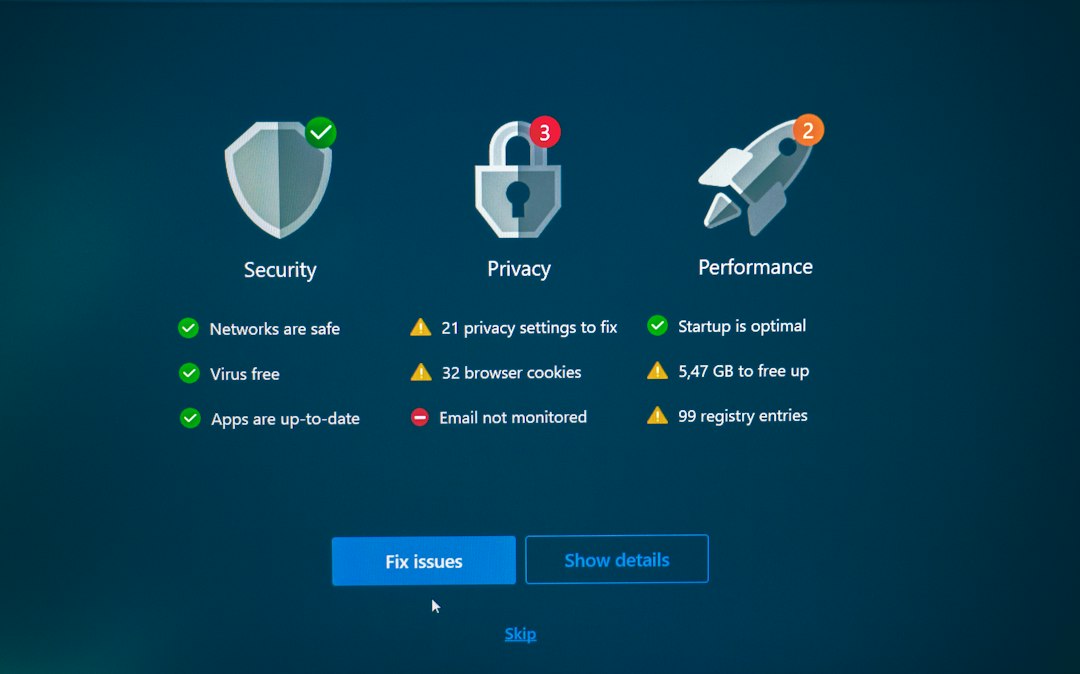
A strong response to CVE-2026-31431 should produce three things: visibility, action, and proof. Visibility comes from scanners. Action comes from security management tools. Proof comes from both.
The best teams keep scanner findings tied to asset ownership, package state, patch jobs, reboot status, and exception records. When a director asks, “Are we exposed?” the answer should not be a spreadsheet with 14 tabs. It should be a short status: how many systems were affected, how many are fixed, what remains, and when the rest will be done.
For Ubuntu, the smartest setup is not scanner versus management tool. It is scanner plus management tool, with Ubuntu-aware verification in the middle. That reduces false alarms, cuts patch time, and gives you a defensible answer when CVE-2026-31431 shows up on the board report.