Artificial Intelligence has entered a transformative era defined by State-of-the-Art (SOTA) AI models that push the boundaries of what machines can understand, generate, and perceive. From advanced Large Language Models (LLMs) capable of complex reasoning to highly accurate computer vision systems that interpret real-world imagery, today’s AI technologies are reshaping industries, research, and daily life. These models are built on massive datasets, powerful neural architectures, and scalable computational infrastructures that allow them to perform tasks once considered uniquely human.
TLDR: State-of-the-art AI models represent the most advanced systems in language processing and computer vision today. Large Language Models (LLMs) excel at generating and understanding text, while modern NLP techniques enhance communication between humans and machines. In computer vision, deep learning architectures enable machines to interpret images and video with remarkable precision. Together, these technologies are revolutionizing industries from healthcare to finance and beyond.
Understanding State-of-the-Art (SOTA) AI Models
State-of-the-Art (SOTA) AI models are those that achieve the highest performance on established benchmarks at a given time. Performance is typically measured through standardized evaluation datasets and metrics, such as accuracy, F1 score, BLEU score, or mean average precision, depending on the domain.
Modern SOTA systems are primarily powered by deep learning, particularly architectures based on neural networks with millions—or even billions—of parameters. Key characteristics of SOTA models include:
- Scalability: Ability to train on enormous datasets using distributed computing.
- Transfer learning: Reusing pre-trained models for downstream tasks.
- Self-supervised learning: Learning from unlabeled data to reduce dependence on human annotation.
- Multimodal capabilities: Integrating text, images, audio, and video in a single model.
Three domains dominate the conversation: Large Language Models (LLMs), Natural Language Processing (NLP), and Computer Vision.
Large Language Models (LLMs)
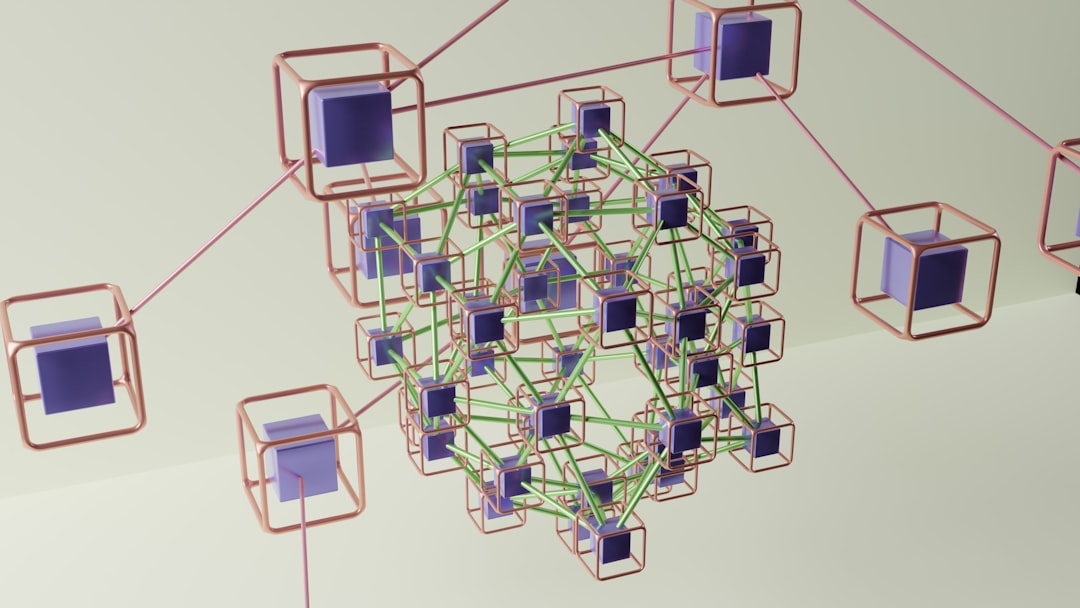
Large Language Models are among the most visible examples of SOTA AI. Built primarily using Transformer architectures, LLMs are trained on vast corpora of text data and learn statistical relationships between words, phrases, and concepts.
How LLMs Work
LLMs rely heavily on the self-attention mechanism, allowing them to weigh the importance of words relative to one another in a sentence. This enables nuanced understanding of context, ambiguity, and long-range dependencies in text.
Core features of SOTA LLMs include:
- Contextual awareness: Understanding meaning based on surrounding content.
- Generative capability: Producing coherent essays, code, dialogue, and summaries.
- Few-shot and zero-shot learning: Performing tasks with minimal or no task-specific training.
- Instruction tuning: Aligning outputs with human intent and safety preferences.
Applications of LLMs
LLMs are widely used in:
- Conversational AI and virtual assistants
- Automated content creation
- Programming assistance
- Legal and medical document analysis
- Language translation and summarization
The scale of these models—often involving billions or trillions of parameters—has been a significant driver of their improved performance. However, scaling also introduces challenges in computational cost, bias, and interpretability.
Natural Language Processing (NLP)
While LLMs are a major component of NLP, the broader field of Natural Language Processing includes a wide array of tasks focused on enabling machines to understand, interpret, and respond to human language.
NLP encompasses:
- Tokenization and parsing
- Named entity recognition (NER)
- Sentiment analysis
- Machine translation
- Question answering systems
From Rule-Based Systems to Deep Learning
Earlier NLP systems relied on rule-based approaches and handcrafted linguistic features. Modern SOTA NLP approaches leverage deep learning models that automatically extract patterns from data.
Transformer-based architectures such as encoder-only, decoder-only, and encoder-decoder models dominate NLP benchmarks. Pretraining on extensive corpora followed by fine-tuning for specific tasks has become a standard paradigm.
Multilingual and Cross-Lingual Capabilities
Recent SOTA NLP models support multiple languages simultaneously. Cross-lingual models can transfer learning from high-resource languages to low-resource ones, increasing global accessibility to AI tools.
These developments have significantly improved:
- Real-time translation systems
- Global customer support chatbots
- International content moderation
- Cross-border information retrieval
Computer Vision
While LLMs dominate text-based applications, Computer Vision represents another pillar of SOTA AI innovation. Computer vision models enable machines to interpret and understand visual information from images and videos.

Evolution of Vision Models
Traditional computer vision relied on manual feature extraction methods such as edge detection and histogram analysis. The rise of Convolutional Neural Networks (CNNs) revolutionized the field by allowing models to learn hierarchical visual features automatically.
More recently, Vision Transformers (ViTs) and hybrid architectures have achieved SOTA performance on benchmarks like ImageNet and COCO.
Key Computer Vision Tasks
- Image classification: Assigning a label to an image.
- Object detection: Identifying and localizing multiple objects.
- Image segmentation: Classifying each pixel in an image.
- Facial recognition: Identifying individuals in images or videos.
- Medical image analysis: Detecting anomalies in scans.
Computer vision is critical in autonomous vehicles, medical diagnostics, surveillance systems, manufacturing quality control, and augmented reality applications.
Multimodal AI: The Fusion of Language and Vision
One of the most exciting frontiers in SOTA AI is multimodal modeling, which integrates multiple forms of input such as text, images, and audio into unified systems.
These models are trained to align visual and textual representations in a shared embedding space, enabling them to:
- Generate captions for images
- Answer questions about visual content
- Create images from text descriptions
- Perform visual reasoning tasks
Multimodal systems move AI closer to human-like perception, combining linguistic reasoning with visual understanding in a seamless manner.
Infrastructure Behind SOTA Models
Training SOTA AI systems requires massive computational infrastructure. Key elements include:
- High-performance GPUs and TPUs
- Distributed training clusters
- Optimized data pipelines
- Advanced optimization algorithms
The scale of training often involves petabytes of data and weeks of compute time. Efficient fine-tuning and parameter-efficient adaptation techniques have emerged to reduce cost while maintaining high performance.
Challenges and Ethical Considerations
Despite their capabilities, SOTA AI models face significant challenges:
- Bias and fairness: Models may reflect societal biases present in training data.
- Explainability: Deep neural networks are often difficult to interpret.
- Data privacy: Training data sourcing raises ethical concerns.
- Energy consumption: Large training runs consume substantial resources.
- Hallucination in LLMs: Generating plausible but incorrect information.
Researchers are actively developing alignment techniques, responsible AI frameworks, and interpretability tools to ensure safer deployment of advanced systems.
The Future of SOTA AI
The trajectory of State-of-the-Art AI suggests continued growth in scale, efficiency, and integration. Future advancements may include:
- More compact yet equally powerful models
- Improved reasoning and long-term memory
- Better human-AI collaboration systems
- Real-time multimodal interaction
- Stronger regulatory and governance frameworks
As research progresses, the distinction between language, vision, and reasoning systems may blur further, leading to unified AI architectures capable of general-purpose intelligence across domains.
Frequently Asked Questions (FAQ)
1. What does “State-of-the-Art” (SOTA) mean in AI?
SOTA refers to the highest-performing models on established benchmarks at a given time. These models represent the most advanced techniques and architectures currently available.
2. What is the difference between LLMs and NLP?
NLP is the broader field focused on enabling machines to process human language. LLMs are a subset of NLP models that use large-scale transformer architectures to perform diverse language tasks.
3. Why are transformers important in modern AI?
Transformers use self-attention mechanisms that allow models to process entire sequences in parallel while capturing long-range dependencies. They are the foundation of most modern SOTA language and vision models.
4. How are SOTA computer vision models used in real life?
They are used in autonomous driving, facial recognition, medical imaging diagnostics, security systems, and manufacturing automation, among many other applications.
5. What are the risks of SOTA AI models?
Risks include bias, misinformation generation, privacy concerns, high environmental costs, and potential misuse. Responsible AI research aims to mitigate these issues.
6. Are SOTA models accessible to smaller organizations?
While training large models can be expensive, many pre-trained models are available through APIs or open-source frameworks, enabling smaller organizations to leverage advanced AI capabilities.
State-of-the-art AI models continue to redefine the limits of machine intelligence. As LLMs, NLP systems, and computer vision technologies evolve, their convergence signals a future where intelligent systems become more integrated, capable, and deeply embedded in society.