5G UWB is usually faster than standard 5G, but it is not a separate generation of mobile service. It is a carrier label, most famously used by Verizon for its higher-performance 5G networks, including millimeter wave and C-band. Standard 5G can be quick, but it often behaves more like improved 4G LTE in daily use. The real difference is speed, capacity, coverage, and how often a phone can actually stay connected to the better signal.
TLDR: Regular 5G offers broad coverage and solid speeds, while 5G UWB is built for much faster downloads, lower lag, and crowded places. A person at home might see 80 Mbps on regular 5G, then 500 Mbps or more on 5G UWB if C-band is available nearby. In a stadium, 5G UWB can also keep service usable when thousands of phones are online at once. The catch is simple: the fastest version does not reach as far and may disappear indoors or a few blocks away.
What Regular 5G Means
5G is the fifth generation of cellular network technology. It was designed to improve speed, latency, capacity, and network efficiency compared with 4G LTE. In practice, though, the label “5G” can mean very different things depending on the carrier, phone, location, and frequency band.
Regular 5G often runs on low-band spectrum. Low-band signals travel far and pass through walls better than higher-frequency signals. That makes them great for rural areas, suburbs, highways, and broad national coverage.
The tradeoff is speed. Low-band 5G may feel only a little faster than strong LTE. A typical user might see speeds from 50 Mbps to 150 Mbps, though real results vary. That is still enough for maps, music, social apps, video calls, and HD streaming.
Honestly, it feels like a letdown when a phone shows a big “5G” icon but a simple app update still crawls along. That happens because the icon alone does not reveal which kind of 5G is active.
What 5G UWB Means
5G UWB stands for 5G Ultra Wideband. In consumer wireless plans, it usually refers to faster 5G service using higher-capacity spectrum. Verizon uses this name for its premium 5G network. Similar ideas appear under other carrier labels, such as 5G UC from T-Mobile or 5G Plus from AT&T.
5G UWB usually includes two types of spectrum:
- Millimeter wave: Extremely fast, but short range. It works best in dense areas, arenas, airports, and city blocks.
- C-band: A strong middle ground. It is faster than low-band 5G and covers more area than millimeter wave.
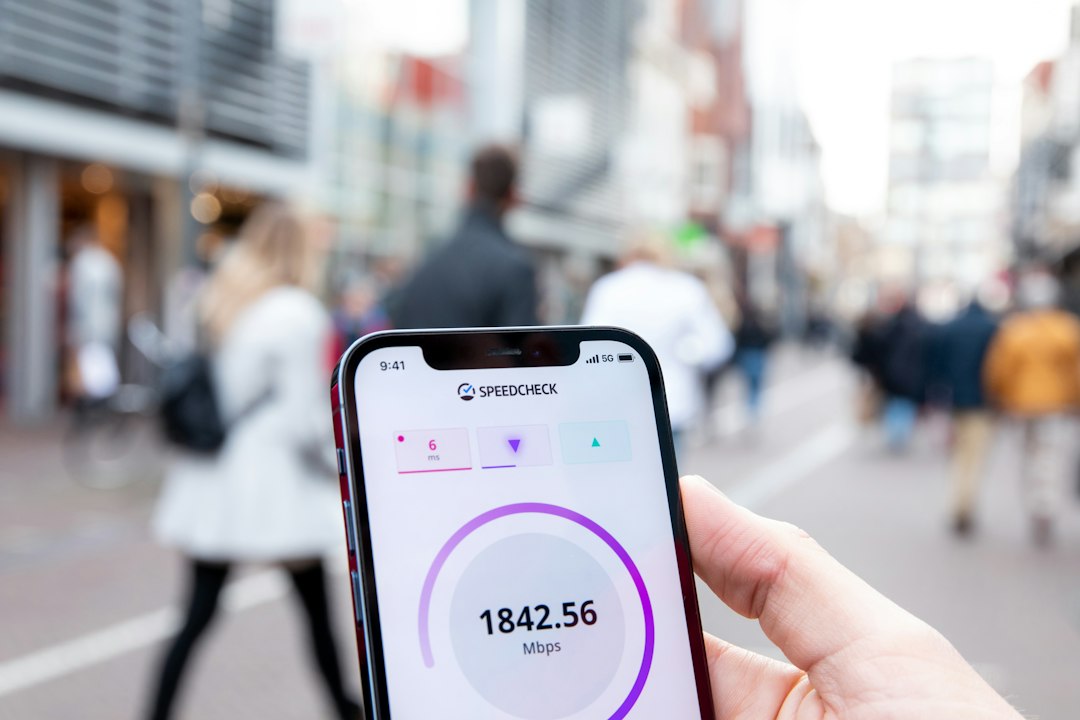
Millimeter wave can produce very high speeds, sometimes over 1 Gbps under ideal conditions. C-band often delivers real-world speeds in the 200 Mbps to 700 Mbps range. Those numbers are not guaranteed, but they show why 5G UWB gets attention.
The Main Differences Between 5G and 5G UWB
The simplest way to compare them is this: regular 5G focuses on reach, while 5G UWB focuses on performance. One covers more places. The other feels much faster when available.
| Feature | Regular 5G | 5G UWB |
|---|---|---|
| Coverage | Very broad | More limited |
| Typical speed | 50 to 150 Mbps | 200 Mbps to 1 Gbps or more |
| Indoor reach | Usually better | Can be weaker, especially with millimeter wave |
| Best use | Everyday mobile coverage | Streaming, gaming, hotspots, crowded venues |
Latency can also improve on 5G UWB. Lower latency means the network responds faster. This matters for cloud gaming, video calls, remote work, and live streaming. Regular 5G may have latency around 30 to 50 milliseconds. A strong 5G UWB connection may drop closer to 15 to 25 milliseconds, depending on conditions.
Why 5G UWB Is Not Always Better
5G UWB sounds like the obvious winner, but coverage is the problem. Millimeter wave is fast, yet fragile. Buildings, glass, trees, buses, and even a user turning a corner can weaken it. Expect to waste time guessing why a speed test hit 900 Mbps outside, then fell under 100 Mbps inside a café.
C-band fixed some of that pain. It covers more ground and works better indoors than millimeter wave. Still, it does not reach as far as low-band 5G. That is why a phone may jump between 5G, 5G UWB, LTE, and Wi-Fi during a normal day.

When 5G UWB Makes a Real Difference
5G UWB matters most when a user needs speed or capacity. Large downloads finish faster. Video uploads take less time. Mobile hotspots feel closer to home broadband. Crowded places also benefit because the network can handle more traffic at once.
Useful cases include:
- Downloading large files: A 5 GB movie may take under a minute on a strong 1 Gbps connection.
- Using a phone as a hotspot: A laptop can get usable broadband speeds without public Wi-Fi.
- Cloud gaming: Lower latency can reduce input delay.
- Live events: Stadiums and concert venues can support more phones without collapsing into unusable service.
- 4K video sharing: Uploads to social platforms can finish much sooner.
For casual use, regular 5G is often enough. Messaging, email, maps, browsing, and music do not need gigabit speeds. A person scrolling social feeds may not notice much difference unless the area is packed with other users.
Does a Phone Need Special Hardware?
Yes. A phone must support the right 5G bands to use 5G UWB. Newer flagship and many midrange phones support C-band. Millimeter wave support is less common, especially outside the United States or on cheaper models.
Carrier plans may also matter. Some plans include access to premium 5G networks, while others may limit hotspot data or video quality. The 5G UWB icon can appear only when the phone, plan, carrier, and local tower all line up.
Which One Should a Buyer Care About?
A buyer should care about regular 5G for coverage and 5G UWB for speed. The best setup is not one or the other. It is a phone and plan that can use both.
For rural users, standard 5G coverage may matter more than peak speed. For city users, commuters, students, and heavy hotspot users, 5G UWB can be a major upgrade. For someone replacing home internet with a 5G plan, C-band or millimeter wave availability nearby becomes critical.
FAQ
Is 5G UWB the same as regular 5G?
No. 5G UWB is a faster type of 5G service, usually tied to higher-capacity spectrum. Regular 5G often covers more area but may be slower.
Is 5G UWB only from Verizon?
The term 5G Ultra Wideband is mainly used by Verizon. Other carriers use different names for similar high-speed 5G service.
Does 5G UWB use more battery?
It can. A phone may use more power when holding a high-frequency 5G signal, especially in weak coverage areas. Newer phones manage this better than early 5G models.
Why does the 5G UWB icon disappear?
The phone may have moved out of range, gone indoors, switched towers, or entered an area without C-band or millimeter wave coverage.
Is 5G UWB worth paying extra for?
It can be worth it for heavy streamers, hotspot users, gamers, and people in crowded areas. Light users may be fine with regular 5G.
Can 5G UWB replace home internet?
Sometimes. If the signal is strong and the plan allows enough data, 5G UWB home internet can work well. Performance depends heavily on address-level coverage.